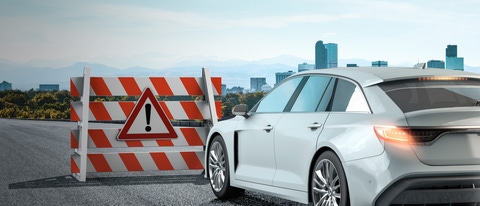
Car applying brakes efficiently due to Hydraulan® premium brake fluids

Fuel and Lubricant Solutions

Brake Fluids | HYDRAULAN®

Start your journey with us

explore

our HYDRAULAN® product portfolio

understand

the full potential of HYDRAULAN®

unlock

exlusive content on MyBASFWorld

connect

and get to know us

Safety doesn't happen by accident ...

1952

In the service of safety

BASF has a longstanding history of setting and shaping the benchmarks of premium vehicle safety. Already back in 1952, BASF patented its first premium brake fluid under the brand name HYDRAULAN® for automotive applications. 

Later, it was also BASF that introduced the first tailor-made brake fluid suitable for vehicles with electro-hydraulic brake systems which even today meets and exceeds the most demanding industry standards. 

Today

Premium Safety Standards

Setting and pushing the benchmarks of premium vehicle safety and continuing to build on long-established close partnerships with the automotive industry, BASF's latest HYDRAULAN® innovations set new performance parameters for premium brake fluids. Whether it comes to performance or specifically addressing the requirements of latest technologies, standards or sustainability - stay prepared for the unexpected!

Premium Quality for Premium Safety

Approvals and International Standard

The brake system is one of the most important safety features of a vehicle and therefore needs to meet the very high standards required by the automotive manufacturers, the automotive industry and automotive safety legislation. Therefore brake fluids must meet stringent specifications and are often also officially approved by the automobile manufacturers.

HYDRAULAN® premium brake fluids exceed the requirements set by international standards in all criteria and are officially approved by leading automobile manufacturers.

Stay prepared
for the unexpected!

Product Detail Page
HYDRAULAN® 402
HYDRAULAN® 402 is a brake fluid without added borates for hydraulic and electro-hydraulic brake systems with a dry boiling point (dry ERBP) of at least 230 °C and a wet boiling point (wet ERBP) of at least 155 °C. Reduced water absorption reduces risk of vapor lock. Suitable for usage in advanced braking systems, our fluid maintains reliable performance even at low temperatures due to its low kinematic viscosity. HYDRAULAN® 402 is based on glycol ethers and contains an effective additive package, e.g. including corrosion inhibitors and antioxidants.
Product Detail Page
HYDRAULAN® 404
HYDRAULAN® 404 is a brake fluid for hydraulic and electro-hydraulic brake systems with a dry boiling point (dry ERBP) of at least 265 °C and a wet boiling point (wet ERBP) of at least 175 °C. Suitable for usage in advanced braking systems, our fluid maintains due to the remarkable low viscosity, consistent performance even at low temperatures. HYDRAULAN® 404 is based on glycol ethers and contains an effective additive package, e.g. including corrosion inhibitors and antioxidants.
Product Detail Page
HYDRAULAN® 406
HYDRAULAN® 406 ESI is a brake fluid for hydraulic and electro-hydraulic brake systems with a dry boiling point (dry ERBP) of at least 265 °C and a wet boiling point (wet ERBP) of at least 180 °C. Due to the extraordinary low viscosity at low temperatures, HYDRAULAN® 406 ESI is especially designed to ensure an exceptional brake response even in extreme cold. It is based on glycol ethers and contains an effective and patented additive package, including effective corrosion inhibitors, antioxidants and lubricity additives. HYDRAULAN® 406 ESI is highly suitable for all vehicles using hydraulic and electro-hydraulic brake systems as well as all autonomous driving systems.

Details about our HYDRAULAN® premium brake fluids

HYDRAULAN® is officially approved by leading automobile manufacturers:

Product Automobile manufacturers (OEM) Approval code
HYDRAULAN® 404 BMW Group (MINI, Rolls-Royce) QV 34 001
GM Europe (Buick, Chevrolet, Cadillac, GMC, Opel, Saab, Vauxhall) GMW 3356
Volkswagen Group (Audi, Bentley, Lamborghini, Seat, Škoda, VW) TL 766-Z
Ford WSS-M6C65-A2
Peugeot S.A. (Citroën, Peugeot) STL S71 2114
Toyota Motor Corporation (Lexus, Toyota) TSK 2602G
Fiat Chrysler Automobiles FCA 9.55597
Geely Group, BYD, FAW Car, GAC Motor, Great Wall Motors, Li Auto, Mahindra & Mahindra, Mazda, NIO, SAIC, Xpeng OEM does not issue an approval code
HYDRAULAN® 406 ESI Mercedes-Benz Cars MB 331.0
Daimler Trucks & Buses DFTR 30B100
Robert Bosch GmbH N28 BS302
Volvo Cars TR 33413395-002
Polestar OEM does not issue an approval code

HYDRAULAN® exceeds the requirements set by the international standards in all criteria: 

Product International standard Dry ERBP [°C] Wet ERBP [°C] Viscosity at – 40°C [mm2/s]
HYDRAULAN® 404 ≥ 265 ≥ 175 ≤ 700
FMVSS No. 116 DOT 4 ≥ 230 ≥ 155 ≤ 1.800
SAE J 1704 Low Viscosity ≥ 250 ≥ 165 ≤ 750
ISO 4925 Class 6 ≥ 250 ≥ 165 ≤ 750
JIS K 2233 Class 6 ≥ 250 ≥ 165 ≤ 750
HYDRAULAN® 406 ESI ≥ 265 ≥ 180 ≤ 700
FMVSS No. 116 DOT 5.1 ≥ 260 ≥ 180 ≤ 900
FMVSS No. 116 DOT 4 ≥ 230 ≥ 155 ≤ 1.800
SAE J 1704 Low Viscosity ≥ 250 ≥ 165 ≤ 750
ISO 4925 Class 7 ≥ 260 ≥ 180 ≤ 750
JIS K 2233 Class 6 ≥ 250 ≥ 165 ≤ 750

Frequently Asked Questions (FAQ) about Brake Fluid Essentials and BASF's HYDRAULAN®

Why are boiling points important and how do BASF's HYDRAULAN® premium brake fluids match up to this?

The absorption of water into the brake system from the environment can never be totally prevented. On average, the brake fluid in a vehicle absorbs up to 1.5% water per annum. As the water content of the brake fluid increases the boiling point of the brake fluid decreases. During braking the heat of friction can heat the brake cylinders and the brake fluid to temperatures in excess of 150 °C. If the boiling point of the brake fluid is exceeded vapor bubbles form in the brake fluid, which, unlike liquids are compressible. When this happens a failure known as “vapor lock” occurs and the force applied to the pedal is not transmitted to the brake cylinders. Because of their high boiling points and chemical properties HYDRAULAN® prevents the formation of bubbles and this potential failure of the brake system.

Why is viscosity important and how do BASF's HYDRAULAN® premium brake fluids match up to this?

Braking takes place in fractions of a second. The hydraulic force generated through the actuation of the brake pedal needs to be transmitted to the wheel brakes instantly. Lower viscosity fluids transfer the force more readily than higher viscosity fluids and therefore it is essential that the brake fluid does not become too viscous at lower temperatures. HYDRAULAN® brake fluids have an extremely low viscosity, particularly at low temperatures and therefore give optimal brake responsiveness.

Why is corrosion protection important and how do BASF's HYDRAULAN® premium brake fluids match up to this?

Corrosion within the brakes system, leads directly to slower responsiveness, can cause blockages in the system or in the worst case lead to the integrity of the sealed brake system being broken. HYDRAULAN® contains highly effective additives which reliably protect the various metals in the braking system (e.g., steel, cast iron, aluminum, brass and copper) against both oxidation and corrosion.

Why is lubrication important and how do BASF's HYDRAULAN® premium brake fluids match up to this?

Lubrication to prevent both friction and abrasion in the brakes system maintains responsiveness, reduces wear and prevents heat build-up in the brake system. By simulating braking under extreme conditions and by endurance testing of braking systems HYDRAULAN® has proved its excellent lubricating performance.

Why is elastomer compatibility important and how do BASF's HYDRAULAN® premium brake fluids match up to this?

Elastomer cups are used to seal the brake cylinders against loss of fluid in the gap between the piston and the cylinder. HYDRAULAN® has been specially formulated to allow for slight swelling of the elastomer cups to ensure a reliable seal and to prevent the loss of fluid.

Why is high temperature thermal stability important and how do BASF's HYDRAULAN® premium brake fluids match up to this?

Under extreme operating conditions the brake fluid can reach temperatures in excess of 150 °C. Despite this high thermal loading the brake fluid must remain chemically and thermally stable. The use of high-quality glycol ester components and special inhibitors in HYDRAULAN® ensures maximum optimization of chemical and thermal stabilities.

What relevance have brake fluid specifications/standards (for example, DOT4) and approvals?

The brake system is one of the most important safety features of a vehicle and therefore needs to meet the very high standards required by the automotive manufacturers, the automotive industry and automotive safety legislation. Therefore brake fluids must meet stringent specifications and are often also officially approved by the automobile manufacturers.

BASF'S HYDRAULAN® are specifically designed to meet and exceed the stringend and manifold requirements across the industry globally.

Which are the most common industry standards around the globe when it comes to brake fluids?

FMVSS: Federal Motor Vehicle Safety Standard

The FMVSS criteria are minimum requirements for vehicle safety in the U.S. The brake fluids requirements are defined by the DOT classification.

  • FMVSS No. 116 DOT 3
  • FMVSS No. 116 DOT 4
  • FMVSS No. 116 DOT 5 Silicon base
  • FMVSS No. 116 DOT 5.1 Non-Silicon base

SAE: Society of Automotive Engineers

SAE International is the leader in the research and development of standards for the transport industry in the U.S.

  • SAE J 1703
  • SAE J 1704 Standard
  • SAE J 1704 Low Viscosity

ISO: International Organization for Standardization

The ISO coordinates the issuing of standards throughout the world with the aim of creating international standards.

  • ISO 4925 Class 3
  • ISO 4925 Class 4
  • ISO 4925 Class 5-1
  • ISO 4925 Class 6
  • ISO 4925 Class 7

JIS: Japanes Industrial Standard 

JIS sets the Japanese industrial standard.

  • JIS K 2233 Class 3
  • JIS K 2233 Class 4
  • JIS K 2233 Class 5
  • JIS K 2233 Class 6